Mandatory Cashless Payments from May 1, 2026: Prepare for the New Legislation in Time
Blog
Read about how the new legislation on cashless payments will affect stores, gastronomy establishments, and services. Discover how the BLUEGASTRO and HOREC systems will support the new payment method via QR codes.
Mandatory Cashless Payments from May 1, 2026: Prepare for the New Legislation in Time
Blog
Read about how the new legislation on cashless payments will affect stores, gastronomy establishments, and services. Discover how the BLUEGASTRO and HOREC systems will support the new payment method via QR codes.
Date: 7.12.2025
|
Posted by: Judita Joštiaková
Updated on February 13, 2026
From May 2026, a requirement will come into force to allow customers to pay for purchases cashlessly. The legislation applies to all businesses that accept payments on-site, i.e. all B2C establishments, from stores and gastronomy outlets to various services and salons.
The new Revenue Records Act, effective from January 1, 2026, introduces the obligation to offer customers a cashless payment. Business owners can choose whether to use a traditional payment terminal or the new payment method via QR payments connected to the national system. The goal is to make the process fast, secure and accessible even for smaller establishments.
In this blog we provide an overview of the most important information. We will also look at how the planned changes will be supported by the Asseco BLUEGASTRO and Asseco HOREC.
What does this mean for retailers and gastronomy outlets?
The new legislation affects all establishments where the customer pays directly on-site. In practice, this means stores, restaurants, bars, cafés, bistros, street food outlets, salons and various services aimed at the end consumer.
Whether you choose a traditional payment terminal, a QR payment via mobile or another commercial alternative, the choice is yours. The change does not apply to pure B2B models where invoicing takes place between companies.
Why is the state introducing mandatory cashless payments?
The Ministry of Finance introduced mandatory acceptance of cashless payments as part of consolidation measures for 2026. The aim is to reduce the volume of cash transactions, simplify revenue control and strengthen the fight against tax evasion.
Although card and mobile payments are already widespread today, many small outlets do not offer them. This is usually due to terminal fees. The state is therefore preparing an alternative that should be cheaper and accessible even to the smallest entrepreneurs: cashless QR payments connected to the new national system.
Instant Payment Notifier (NOP): the basis of the new solution
The Financial Administration, in cooperation with the Slovak University of Technology, is developing the Instant Payment Notifier (NOP). Its main functions are generating a unique transaction ID for each payment, connecting to banks and automatically notifying the merchant's POS of a received payment.
The system will allow cashless payments even for those who do not have a traditional terminal. The POS will receive the payment information automatically, so the merchant does not have to monitor online banking or bank notifications.
How will QR payments work in practice?
Prepare your establishment for the change as follows:
- Request activation of QR payments from your POS system provider.
- Ensure your POS is configured for the new payment method.
- At the bank, designate your business account as a notifier.
The state expects various "QR terminals" to appear on the market, which will function as modular add-ons to existing POS systems.
And what exactly should the QR code payment process look like? Here are the individual steps:
- The staff selects the "QR payment" option on the POS.
- The POS generates a QR code with a specific transaction ID.
- The customer scans the code with their mobile device.
- The bank's mobile app automatically fills in all details including the merchant's name.
- The customer confirms the payment.
- The bank sends the money to the merchant's account almost immediately.
- The NOP system identifies the payment and sends the POS a notification of the successful credit.
- The staff prints the receipt and hands over the goods or service.
According to the Financial Administration, the entire process will take only a few seconds.
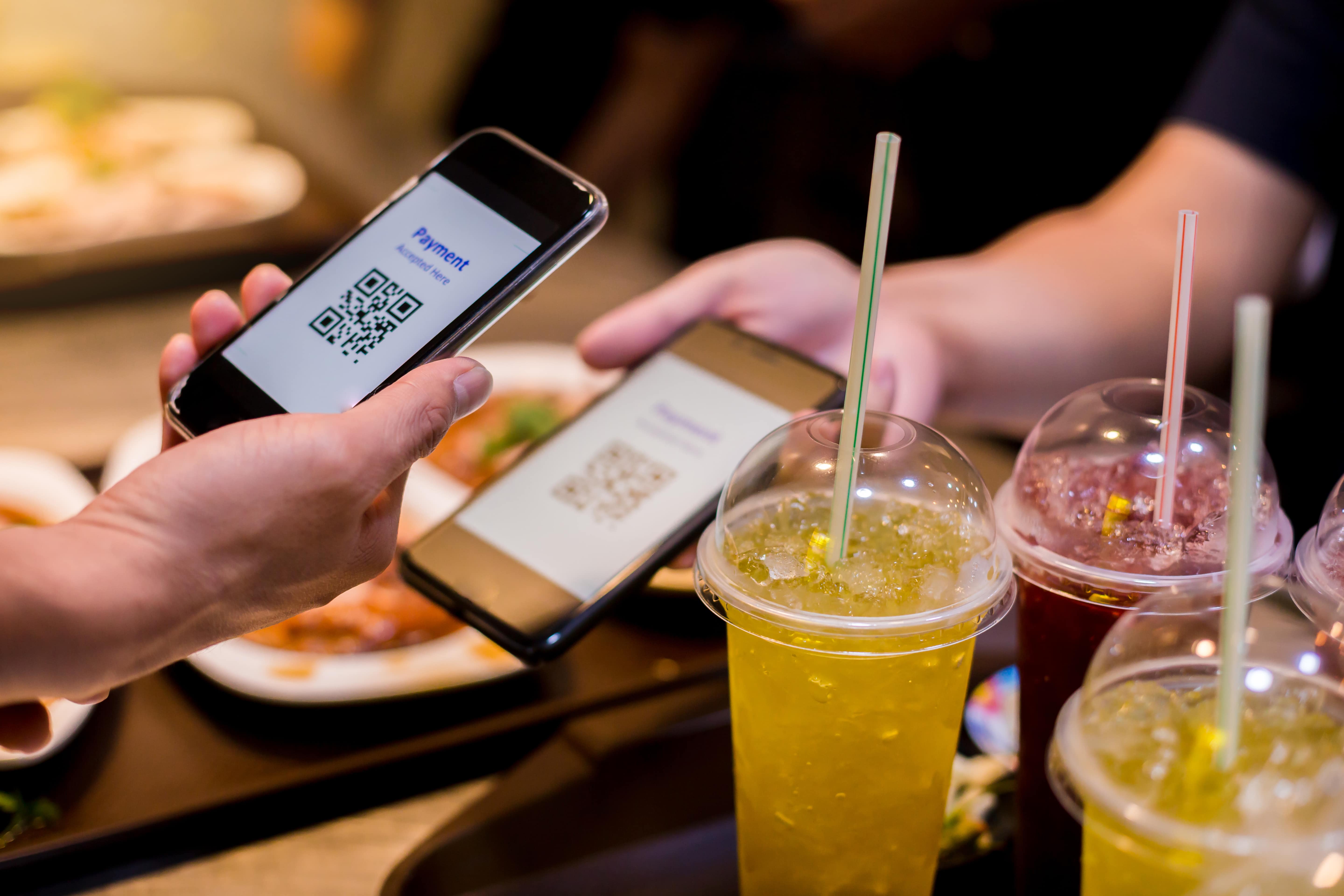 New cashless payment method via QR code
Minimum payment amount
The new law also removes previous limits. If the price of goods or services exceeds €1, the establishment must allow a cashless payment. The merchant can choose the method of payment – card, QR or another form. If you have a traditional terminal, you are not required to provide QR payments, and vice versa.
Implementation timeline
The government has decided to postpone the original March deadline to May, giving businesses two extra months to implement and test the new solution.
- 1 Nov 2025 – "Family & Friends" pilot for selected businesses.
- Jan 2026 – open public pilot for all interested parties.
- 1 May 2026 – full rollout, mandatory for all B2C businesses.
From January it will be possible to verify which banks provide the notification service – so far announced: Tatra banka and Slovenská sporiteľňa.
How will these changes affect BLUEGASTRO users?
The BLUEGASTRO and HOREC systems are being prepared to fully support the new cashless payment method via QR payments. A new separate payment type KVERKO, will be added to the POS solution, operating as simply and clearly as common payment methods – cash or card.
The QR code required to perform the payment will be displayed not only in main applications such as Kassandra or eSign, but also in other modules you use in daily operations. The whole process is designed so that staff do not have to change their usual routines and payments remain fast and intuitive.
For easy QR code display and full control over QR payments, we are also preparing a new online tool called QCudi. You can open it on any external device – a computer, tablet or smartphone. All you need is an internet connection and a web browser. QCudi can be set up in a few clicks and will immediately display the QR code and the payment status in real time, which will significantly simplify the staff's work.
Thanks to these extensions, you will have all the necessary tools in systems to meet legislative requirements and at the same time gain a modern way to enable customers to pay quickly and securely.